
Content Resources Page
Before the Show
Content Analysis
PLAY SYNOPSIS
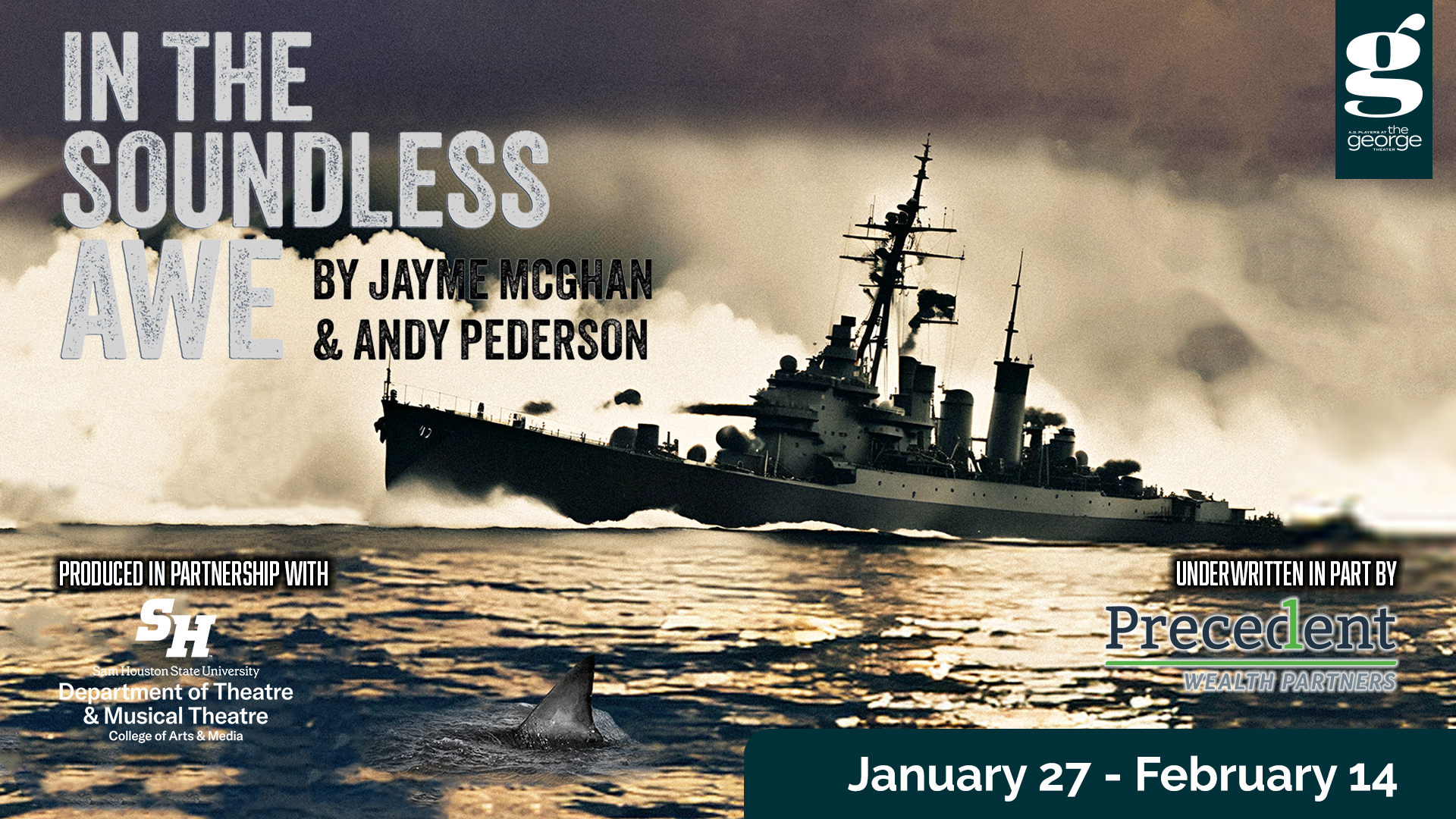
Twelve minutes that changed everything—one of the most harrowing naval disasters in American history comes to life on stage. On July 30, 1945, the USS Indianapolis was struck by two Japanese torpedoes and sank in just twelve minutes, leaving nearly 900 men adrift in the Pacific; five days later, only 321 would be rescued. *In the Soundless Awe* confronts the human cost behind this tragedy. Set twenty-two years after the sinking, the production centers on Charles Butler McVay III, the captain court-martialed and publicly disgraced in its aftermath. Alone and haunted by memory, McVay is visited by the specters of the men he lost, their voices rising from the depths in a chilling reckoning of duty, guilt, and sacrifice. Blending historical fact with psychological drama, this gripping work examines the burden of command, the complexities of accountability, and the enduring scars of war. Stark, immersive, and unflinching, *In the Soundless Awe* draws audiences into the final nightmare of a man forever tethered to the sea—and to the silence that followed, where answers remain as elusive as the depths themselves.
CHARACTERS
CAPTAIN CHARLES MCVAY III- Captain of the U.S.S. Indianapolis- An old man.
THE GRAY WOMAN- A specter.
SAILOR 1- Senior Chief Petty Officer. Late Twenties.
-Also plays MCVAYS FATHER, A VOICE, JUDGE
SAILOR 2- Seaman. 18.
-Also plays SAWYER, JURY 1, PROSECUTOR, OVERHEAD VOICE
SAILOR 3- Medic. Early 30’s.
-Also plays GARNER, JURY 2, CAPTAIN HASHIMOTO
MARINE- Marine. Second Lieutenant. 22.
-Also plays GRIGGS, JURY 3, PROSECUTOR 2
SAILOR 5- Seaman. Recently enlisted. 18.
-Also plays MOTHER, JURY 4, McVAY’s MOTHER, LOUISE, ANOTHER VOICE
SAILOR 6- Petty Officer Third Class. 19.
-Also plays JURY 5, DEFENSE, and A THIRD VOICE
THEMES
War, Duty, and Leadership
The play examines the immense responsibilities of military leadership and the difficult decisions made during wartime. Captain McVay wrestles with questions of accountability, honor, and sacrifice as he confronts the aftermath of tragedy.
Survival and Human Resilience
At its core, the story is about endurance. Stranded sailors face overwhelming physical and emotional challenges while struggling to maintain hope in impossible circumstances.
Trauma and Survivor's Guilt
The emotional heart of the play centers on the lasting effects of trauma. Characters grapple with grief, loss, guilt, and memories that continue to haunt them long after the events themselves have ended.
Faith and Meaning
Throughout the play, characters turn to stories, faith, and one another in an attempt to make sense of suffering and find comfort amid despair.
Memory and Healing
The play explores how memories can shape a person's life, illustrating both the burden of the past and the possibility of reconciliation and peace.
CONTENT FOR PARENTAL CONSIDERATION
MATURE SUBJECT MATTER
Discussions of war, death, and loss
Emotional depictions of grief and survivor's guilt
Psychological distress, hallucinations, and trauma-related episodes
References to military casualties and wartime suffering
Some strong language
VIOLENCE AND DISTURBING IMAGERY
References to combat and the sinking of a naval vessel
Descriptions of severe injuries, burns, drowning, and death
Depictions of sailors stranded at sea experiencing starvation, dehydration, and exhaustion
References to shark attacks and dismemberment
Blood imagery and discussions of bodily injury
LANGUAGE
Mild to moderate profanity is used throughout the play, reflecting the realities of military life and the extreme circumstances faced by sailors during World War II. The language helps convey the fear, stress, and camaraderie of the characters and is used for historical authenticity rather than shock value.
Mild to moderate profanity, including words such as "hell," "damn," and "son of a bitch"
Wartime slang and coarse language reflective of the historical setting
Emotionally charged dialogue during scenes of crisis, trauma, and survival
Language is used to support historical authenticity and character development rather than for gratuitous effect
ALCOHOL/DRINKING
References to alcohol consumption in social settings
Mentions of drinking and intoxication among military personnel
SMOKING
References to cigarette smoking consistent with the World War II era
Smoking may be depicted depending on production choices
SPECIAL EFFECTS/SENSORY ADVISORY
Audience members should be aware that productions may include:
Loud sound effects, including explosions, alarms, ship noises, and battle sounds
Sudden lighting shifts, blackouts, and intense spotlight effects
Projections depicting wartime imagery, water, blood, and other distressing visuals
Atmospheric haze or fog effects
Emotional scenes involving panic, fear, grief, and psychological distress
Extended sequences portraying hallucinations, disorientation, and traumatic memories
RUNNING TIME
1 hour 45 minutes with no intermission
SHOW DATES
January 27 - February 14, 2027
WHAT IS THE RECOMMENDED AGE In The Soundless Awe?
Recommended for mature teens and adults due to strong themes of war, trauma, loss, disturbing imagery, and emotional intensity.
HOW MUCH ARE TICKETS TO In The Soundless Awe?
Tickets prices vary between $25 and $80 depending on where you sit in the theater.
Executive Artistic Director’s Note
Recounting the worst Naval disaster in United States history, In the Soundless Awe is the story of the sinking of the U.S.S. Indianapolis (made famous by Captain Quint’s monologue in JAWS) and subsequent scapegoating and erroneous court-martialing of its captain, Charles Butler McVay III. Twenty years after the sinking, Captain McVay took his own life after many years of night terrors and overwhelming guilt. Years ago, Andy Pederson and I imagined what that final nightmare might have looked like. And that pondering turned into our most widely produced play. We have spent many hours over the years conversing with survivors of the Indy, their families (both survivors and those lost at sea), military brass, history experts, and more. And we’ve been left with nothing but sheer gratitude for the brave men who put their lives on the line to protect this nation in the waning days of WWII. Staged entirely in a pool of water on stage, In the Soundless Awe is not just a history lesson—it’s an ultra-theatrical and visceral awakening to the realities of war and the sacrifices made on behalf of all of us. The stories of survival, faith, heartbreak, forgiveness, and love that have poured out of the survivors since that fateful night in 1945 are astonishing. And we’re delighted to be able to share them with you. We will have a number of guest speakers during this production for post-show discussions including the undersecretary of the Navy, William Toti, New York Times Bestselling Author of “Indianapolis”, Sara Vladic, and a whole host of other members of the Indianapolis survivors community. Partnering with Sam Houston State University (a majority of the characters are college aged) to tell this story will be a first for A.D. Players and a professional debut for many of the cast. This show is not to be missed.
After the Show
Theatre is an art form that from its inception has had the proven power to move and to stir the human spirit. This can have a wide variety of manifestations. We are often stirred up, and that kind of event can have us needing to talk to someone about it. We recommend that you find a licensed mental healthcare professional to help you work through difficult feelings that may have been stirred up by a play. You should always work with someone that you have a great connection with. If you need help starting that process, we recommend our partners at Ellie Mental Health as a starting place.

You might also be stirred to do something about how a particular play made you feel. Below we have provided a quick link to be able to donate to us here at the A. D. Players at the George Theatre. As a 501(c)3, we rely heavily on donations to continue the work that we do. If, however, you want to do something meaningful about some of the issues addressed by our shows, we are also including links to organizations that do meaningful work in the areas addressed by the content of our show. These are not exhaustive options, but merely starting places to help you on your journey to continue to effect change in your world.
